DHI Hair Transplant Method Explained for Canadians in Turkey

Summary
This article explains the DHI hair transplant method and its direct hair implantation technique in Turkey.
It details the innovative process, technical methodology, and benefits compared to traditional FUE procedures.
Canadian patients seeking advanced and affordable hair restoration solutions will find thorough insights on patient candidacy, realistic outcomes, and the no shave hair transplant option.
DHI hair transplant in Turkey presents a modern solution for Canadian patients experiencing hair loss who are facing extended wait times and high costs at home.
Canadian patients increasingly explore international healthcare options to access advanced hair restoration methods that prioritize precision and minimal scarring.
The DHI method uses specialized instruments to directly implant hair follicles, offering improved density and a natural hairline compared to traditional approaches.
Turkey has emerged as a premier destination due to its state-of-the-art, JCI-accredited facilities, experienced surgeons, and cost-effective treatment packages.
With Canadian healthcare challenges such as long wait times and considerable expenses, patients look for effective, timely solutions.
This article introduces the DHI hair transplant process as an accessible alternative, detailing its technical advantages over FUE techniques and practical patient considerations.
Readers will understand the nuances of the direct hair implantation method and learn why Turkey offers an advanced, safe, and affordable option.
The information provided reassures patients of the high safety standards and clinical expertise that underpin this innovative procedure.
Understanding the DHI Technique
The DHI (Direct Hair Implantation) technique has revolutionized hair transplantation by offering a more precise and minimally invasive solution to hair loss.
In this method, hair follicles are extracted and then implanted individually using specialized tools that ensure the correct angle, depth, and direction.
This technique minimizes scarring while maximizing natural appearance and graft survival.
Advanced instruments allow for a one-step process that decreases handling time for each follicle, thereby preserving cellular vitality and improving overall success rates.
Canadian patients benefit from comprehensive pre-operative assessments that ensure optimal outcomes, with expert consultations that clarify the technical nuances of the procedure.
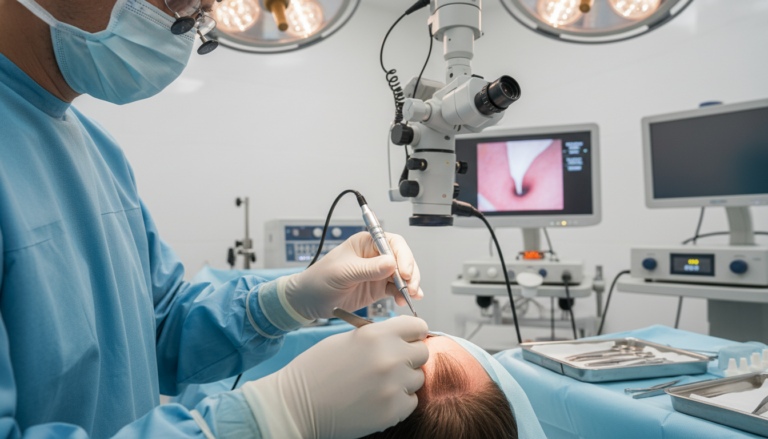
In the DHI process, hair follicles are carefully extracted and immediately prepared for implantation using a refined instrument known as a Choi pen.
This pen streamlines the process by combining follicular unit insertion with precise control over implantation depth.
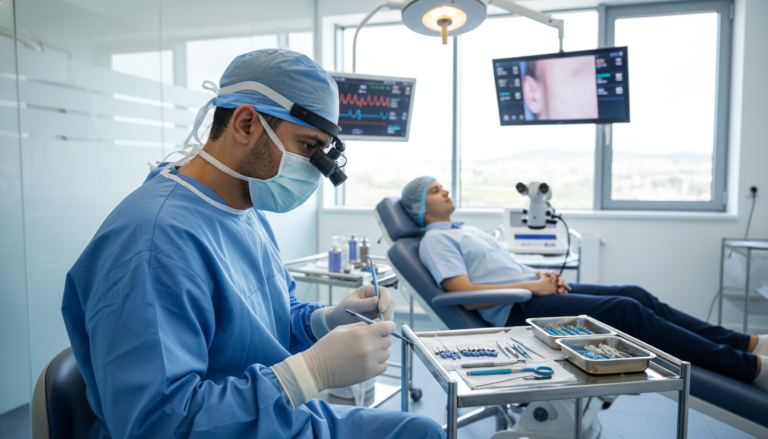
The procedure follows stringent safety protocols in JCI-accredited facilities to maintain high standards of sterility and patient care.
Surgeons meticulously plan the hairline design, considering the patient’s unique facial structure, age, and future hair loss progression.
This tailored approach enhances both aesthetic outcomes and long-term patient satisfaction, reducing the need for multiple sessions and elaborate recovery periods.
Moreover, DHI offers significant advantages over traditional methods by ensuring a higher density of transplanted hair and a natural hairline that closely mimics native growth patterns.
The technology behind DHI is designed to minimize trauma to the scalp, reducing post-operative swelling and discomfort.
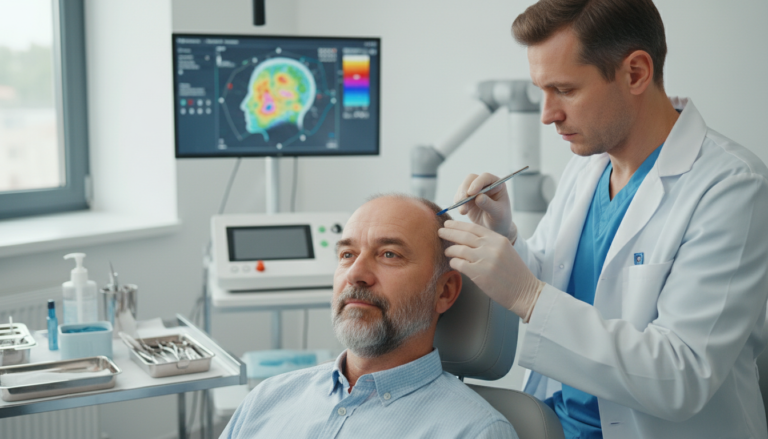
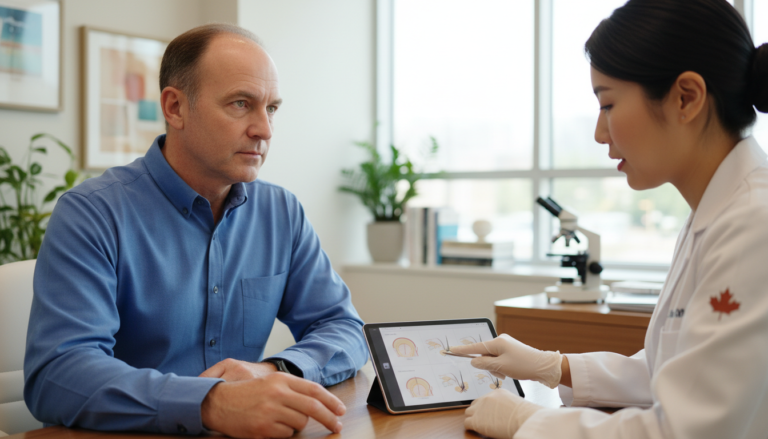
Patients undergo a detailed consultation process to assess eligibility, which typically includes scalp analysis and imaging studies.
The entire protocol is structured to provide a single-step solution where hair follicles are directly implanted without the need for creating recipient sites beforehand.
This meticulous process, combined with the latest technological tools, underscores why Canadian patients find DHI an attractive option when compared to conventional FUE techniques.
Procedure Details and Methodology
The DHI procedure begins with the extraction of hair follicles using micro punches that remove individual units with minimal disruption to the surrounding tissue.
Once extracted, the follicles are immediately placed in a specialized solution that preserves their viability until they are implanted.
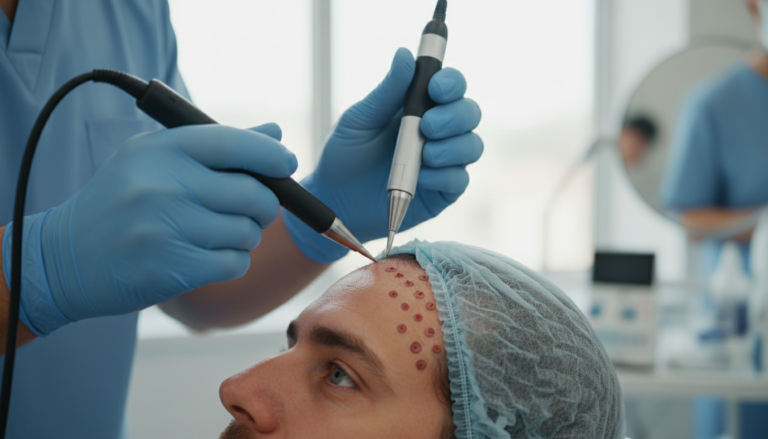
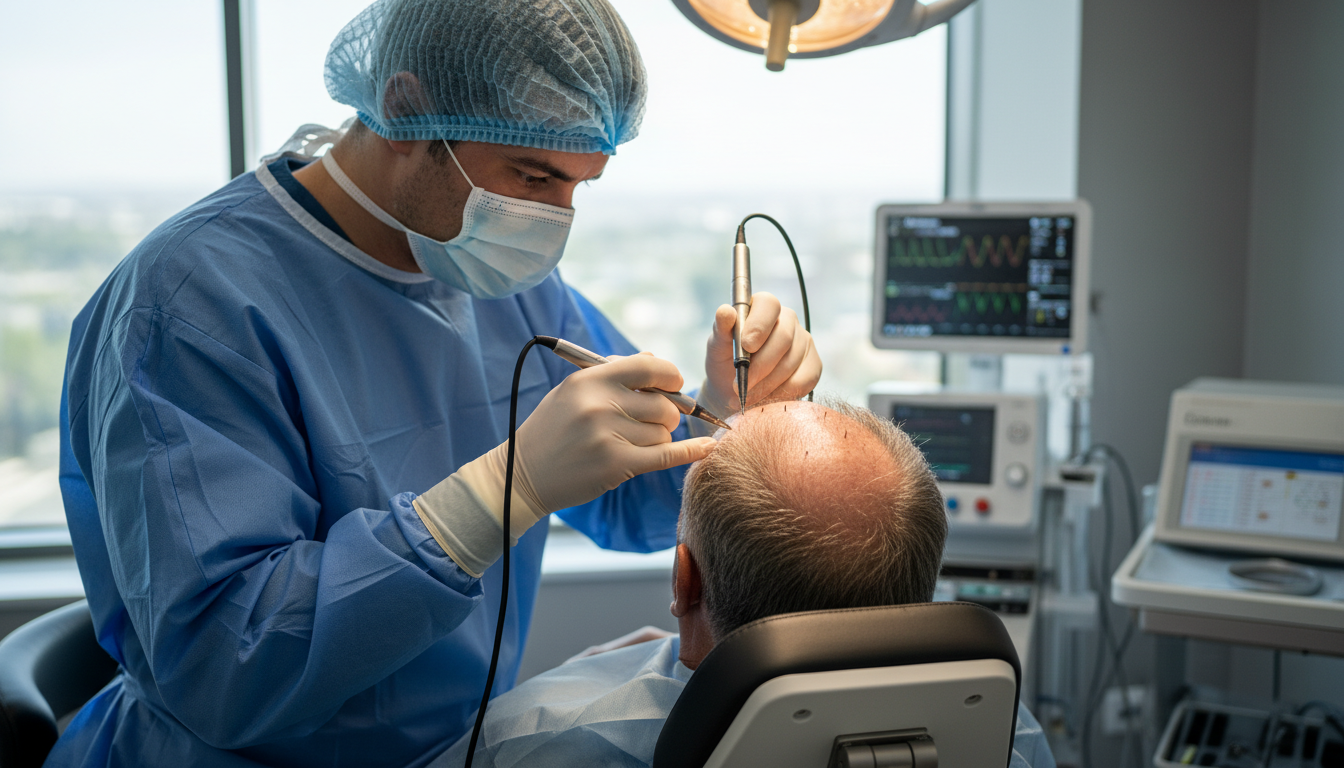
The implantation is performed using the Choi pen, which allows the surgeon to control both the depth and angle of each hair follicle insertion.
This precision is critical for achieving a natural look and ensuring a high survival rate of the grafts.
The entire procedure is performed under local anesthesia, ensuring that patients remain comfortable while allowing for continuous monitoring of the surgical field.
During the procedure, the surgeon designs the desired hairline meticulously.
The Choi pen is used to create tiny incisions where each follicle is implanted individually.
This direct technique eliminates the need for pre-made recipient sites, reducing the duration of the surgery and minimizing tissue handling.
The controlled insertion process ensures that each hair is placed at an optimal position, ensuring natural density and coverage.
Consequently, the procedure demonstrates how direct hair implantation differentiates itself with technical precision and efficiency, making it particularly suitable for patients with limited donor supply or those seeking a more refined aesthetic result.
Advantages Over Traditional Methods
DHI offers distinct advantages over conventional hair transplant techniques such as FUE.
One of the major benefits is its capacity to deliver a more natural hairline with improved graft survival due to immediate implantation of follicles after extraction.
Minimizing the time follicles spend outside the body reduces dehydration and stress, which is linked to higher success rates.
Patients appreciate that DHI is less invasive, with fewer incisions and reduced trauma to the scalp, leading to shorter recovery times and minimal post-operative discomfort.
The advanced Choi pen technology plays a crucial role in ensuring the successful and even distribution of hair, aligning with aesthetic and clinical standards.
In addition, the precision inherent in DHI allows for tailored treatments that focus on the patient’s unique hair loss pattern.
The process emphasizes natural density and proper hairline contouring, which can be more challenging with FUE.
Clinical evaluations demonstrate that DHI can achieve a higher density outcome by optimizing both the extraction and implantation procedures.
Patients considering DHI benefit from detailed pre-operative consultations that inform them of expected outcomes and the comparative advantages over traditional methods.
With its combination of technological innovation and minimized invasiveness, DHI stands out as a leading technique in contemporary hair restoration, especially valuable for Canadian patients looking to avoid long wait times for alternative treatments in their home country.
Comparing DHI vs. FUE Techniques
Comparing DHI with FUE (Follicular Unit Extraction) highlights key technical differences that significantly influence patient outcomes.
DHI uses the dedicated Choi pen for direct implantation, ensuring controlled placement and enhanced graft survival.
FUE, on the other hand, involves the surgical extraction of follicles followed by manual creation of recipient sites, which introduces more handling of the grafts and potential for error.
The streamlined nature of DHI reduces the overall procedure time and limits the exposure of hair follicles to environmental stressors.
This methodological difference is vital for ensuring higher densities and achieving a more natural hairline, making it an appealing option for Canadian patients facing long waiting periods in their domestic healthcare system.
Technical differences between DHI and FUE extend to the surgical workflow and patient experience.
DHI integrates extraction and implantation into a single seamless process, whereas FUE requires a separate recipient site creation phase.
The enhanced precision of DHI offers a controlled implantation process that is generally associated with reduced post-operative inflammation and faster healing times.
Furthermore, patient suitability differs; individuals with extensive donor areas and less complex hair loss patterns might opt for FUE, while those seeking refined aesthetic results with minimal scarring often choose DHI.
Both techniques have undergone extensive clinical evaluations, with studies suggesting that DHI may provide a higher graft survival rate and a more natural appearance overall.
Canadian patients, in particular, benefit from this comparative clarity as they navigate treatment options in Turkey, where modern techniques and competitive pricing converge to provide high-quality healthcare solutions.
Technique Differences and Patient Suitability
The fundamental technical variation between DHI and FUE lies in their approach toward hair graft handling.
In DHI, the direct implantation process minimizes the time grafts spend outside the body, thereby preserving their viability and ensuring more consistent outcomes.
Patient suitability for DHI includes individuals with specific hair loss patterns and a desire for a natural hairline, as the method caters to the precise placement of each follicle.
On the contrary, FUE may be recommended for patients with a larger donor area or those who are comfortable with a slightly more invasive process.
Detailed pre-operative assessments help determine the most suitable approach, ensuring that patient-specific factors such as hair density, age, and scalp health influence the treatment choice.
Clinical Outcomes and Success Rates
Clinical evidence indicates that DHI frequently results in superior graft survival and a natural hairline compared to FUE.
Patients undergoing DHI report fewer incidences of shock loss, which is often observed when grafts are exposed to prolonged handling during FUE procedures.
The enhanced precision offered by the Choi pen in DHI contributes to improved density and uniformity, with many clinics documenting higher success rates.
Although both techniques yield satisfactory results under proper conditions, the selection often depends on individual patient profiles and aesthetic goals.
Canadian patients are empowered by this comparative clarity as they navigate treatment options in Turkey, where modern techniques and competitive pricing converge to provide high-quality healthcare solutions.
Patient Considerations and No-Shave Options
Patient considerations before opting for a DHI procedure include thorough evaluations of hair loss severity, donor area suitability, and overall scalp health.
This section clearly outlines the criteria that help determine candidacy for the DHI hair transplant, ensuring that each patient receives the most personalized treatment plan.
Pre-operative consultations involve detailed scalp examinations and imaging studies, which are crucial for planning the hairline design and predicting post-operative outcomes.
Canadian patients, who often face long wait times in their domestic system, benefit from prompt evaluations and tailored treatment regimens available in Turkey’s advanced medical centers.
The focus remains on ensuring patient safety and aligning treatment expectations with realistic clinical outcomes.
Assessment and Preparation
Patients must undergo a rigorous assessment to confirm their suitability for the DHI procedure.
This includes medical history reviews, scalp examinations, and sometimes blood tests to rule out conditions that may adversely affect healing.
The process ensures that only candidates with appropriate donor hair density and overall scalp health are selected for the procedure.
Detailed pre-operative instructions are provided, covering aspects such as medication management and lifestyle adjustments to optimize recovery.
These assessments are critical for establishing a successful surgical outcome while minimizing potential risks, and they allow healthcare professionals to customize the treatment plan to each patient’s unique needs.
Managing Side Effects and Recovery
Following the procedure, patients receive careful instructions to manage any potential side effects and promote optimal healing.
Common side effects may include mild swelling and temporary redness at the implantation sites, which are typically manageable with prescribed medications and post-operative care guidelines.
Recovery protocols stress the importance of avoiding strenuous physical activity during the initial days after the procedure.
Continuous follow-up during the recovery period ensures that any unexpected complications are promptly addressed.
Moreover, the evolving no shave hair transplant option provides an alternative for patients who prefer not to shave their head before the procedure.
This option caters to those seeking minimal disruption to their daily appearance and is particularly appealing for professionals who cannot afford prolonged downtime.
With tailored recovery protocols and comprehensive patient education, the overall experience is designed to ensure safety and enhance the long-term success of the procedure.
Conclusion
In summary, the DHI hair transplant method offers a sophisticated and minimally invasive solution for hair loss that addresses many of the concerns Canadian patients face, such as long wait times and high treatment costs.
The detailed procedure leverages direct hair implantation using the Choi pen, resulting in improved graft survival, natural hairline formation, and significantly reduced scarring compared to traditional FUE methods.
With advanced technology and stringent patient safety protocols supported by JCI-accredited facilities, DHI stands as a leading choice for those seeking reliable and efficient hair restoration.
Canadian patients are empowered to make informed healthcare decisions as they explore the benefits of advanced hair restoration techniques.
With a clear understanding of the technical process, patient suitability, and recovery expectations, DHI offers an accessible option for immediate treatment.
For those considering this procedure, scheduling a free medical consultation via WhatsApp at +905055002882 can provide personalized guidance on whether the DHI hair transplant is right for achieving their aesthetic and clinical goals.
This approach underscores the commitment to providing high-quality, affordable healthcare that meets modern patient needs.